Table of Contents
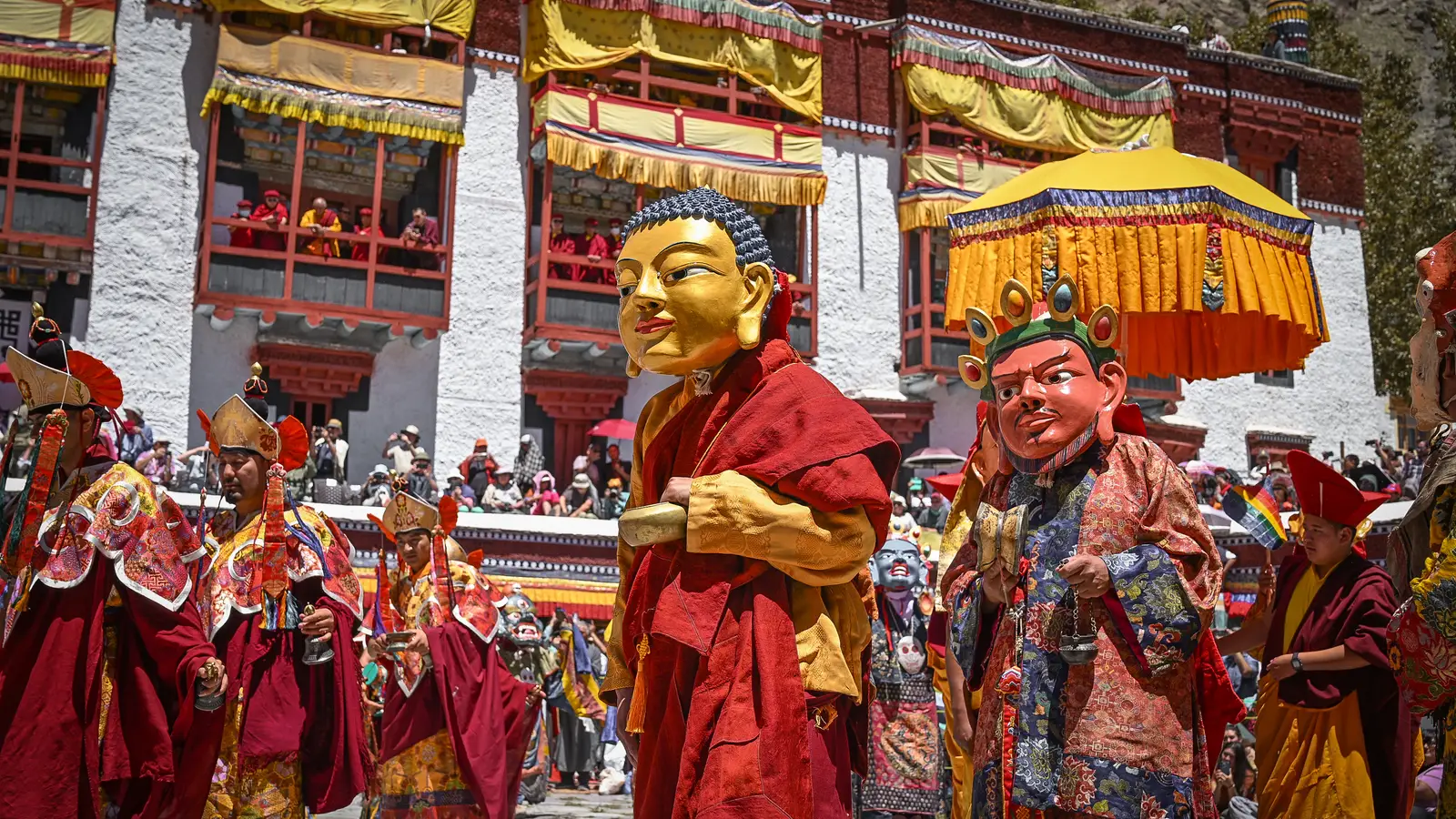
Ladakh's monastic festivals are among the most memorable cultural experiences in the Himalayas. Held at ancient monasteries across the region, these events bring together sacred mask dances, prayers, rituals, music, and community gatherings.
For both international travellers and Indian visitors, they offer a rare chance to see Ladakh's Buddhist heritage not in a museum or a staged show, but in living practice.
What Makes These Festivals Special?
What sets Ladakh's monastic festivals apart is that they are deeply religious as well as visually striking. The famous masked Cham dances are not simply performances for visitors; they are tied to Buddhist teachings, protective rituals, and monastery traditions.
That is why attending one of these festivals can feel both celebratory and deeply spiritual at the same time.
Month-by-Month Festival Guide for 2026
January: Spituk Gustor
16-17 January 2026 | Spituk Monastery
Spituk Gustor opens the monastic festival season in winter and is one of the best-known early events in Ladakh. The highlight is the sacred mask dancing, which represents the victory of good over evil, making it a strong introduction to Ladakh's ritual culture.
February: Dosmochey
15-16 February 2026 | Leh, Likir, Diskit
Dosmochey is associated with purification and the removal of negative forces. For travellers, it is especially interesting because the festival is linked with major centres such as Leh, Likir, and Diskit, giving it a wider regional presence than many monastery-specific events.
March: Matho Nagrang, Yargon Tungshak, Shey Doo Lhoo and Stok Guru Tsechu
Matho Nagrang - 02-03 March | Matho Monastery
Matho Nagrang is best known for its oracles, who reveal divine visions during the festival. Combined with colourful Cham dances and ritual activity, it has a distinct character even within Ladakh's wider festival calendar.
Yargon Tungshak - 03-04 March | Yarma Monastery
Held in Nubra Valley, Yargon Tungshak mixes monastery prayers with festive local energy. The calendar also connects it with local cuisine and a lively two-day atmosphere, which makes it feel especially warm and community-oriented.
Shey Doo Lhoo - 18 March | Shey Monastery
Shey Doo Lhoo is tied to the beginning of the sowing season. That agricultural connection gives the festival a grounded local feeling, as monks and villagers come together to pray for a successful harvest.
Stok Guru Tsechu - 25-26 March | Stok Palace Monastery
Stok Guru Tsechu is another festival strongly linked with oracles and prophecy. The setting at Stok Palace Monastery adds to its appeal, and the overall experience feels intimate, ceremonial, and deeply rooted in Ladakhi belief.
May: Saka Dawa
31 May 2026 | All over Ladakh
Saka Dawa is one of the holiest observances in the Buddhist calendar and is celebrated across Ladakh rather than at just one monastery. It commemorates Buddha's birth, enlightenment, and Parinirvana, so the mood is devotional, with prayers and offerings taking centre stage.
June: Yuru Kabgyat and Hemis Tsechu
Yuru Kabgyat - 13-14 June | Lamayuru Monastery
Lamayuru's Yuru Kabgyat is a two-day mask dance festival associated with peace and the destruction of evil. Set in one of Ladakh's most visually dramatic monastic landscapes, it is a memorable choice for visitors who want ceremony and scenery together.
Hemis Tsechu - 24-25 June | Hemis Monastery
Hemis Tsechu is widely regarded as Ladakh's grandest monastic festival. It honours Guru Padmasambhava and is celebrated through majestic mask dances and rituals, making it one of the biggest highlights of the year for cultural travellers.
July: The Peak Festival Month
Shachukul Kabgyat - 02-03 July | Shachukul Monastery
This festival centres on traditional Cham dances and celebrates Buddhist teachings and monastic togetherness. It is a good example of how Ladakh's smaller monastery festivals can still feel rich in meaning and atmosphere.
Stongde Gustor - 02-03 July | Stongde Monastery, Zanskar
Stongde Gustor is one of Zanskar's vibrant festival gatherings and is known for ritual dance and spiritual devotion. For travellers exploring Zanskar, it offers a strong introduction to the region's monastery life.
Phyang Tserup - 12-13 July | Phyang Monastery
Phyang Tserup brings monks and local residents together for prayers and blessings. The overall tone is devotional, but like many Ladakhi festivals, it also carries a joyful community spirit.
Karsha Gustor - 12-13 July | Karsha Monastery, Zanskar
Held at Zanskar's largest monastery, Karsha Gustor celebrates the victory of virtue through colourful mask dances. Its scale and setting make it one of the standout mid-summer events in the Zanskar region.
Korzok Gustor - 17-18 July | Korzok Monastery
Korzok Gustor takes place at high altitude near Tso Moriri Lake, which gives it a very different feel from festivals closer to Leh. Along with sacred Cham dances, the festival is associated with the joy of Ladakh's nomadic culture.
Takthok Tsechu - 24-25 July | Takthok Monastery
Takthok Tsechu is held in Ladakh's cave monastery and honours Guru Padmasambhava. The cave-monastery setting adds a strong sense of sacred space, and the masked performances are a major attraction.
Sani Naro Nasjal - 28-29 July | Sani Monastery, Zanskar
This is described in the calendar as an ancient Zanskar festival, and that heritage comes through in its focus on traditional dances and communal celebration. It feels less like a spectacle and more like a living local tradition.
Tingang Tserkarmo - Date not listed | Tserkarmo Monastery, Tingmosgang
The calendar notes that Tingang Tserkarmo is celebrated on the full moon day of the sixth Tibetan month. Since no fixed 2026 Gregorian date is listed, it is best treated as a festival to track more closely if you plan to travel around Tingmosgang.
October: Diskit Gustor, Nyoma Gustor and Thiksey Gustor
Diskit Gustor - 08-09 October | Diskit Monastery
Diskit Gustor is one of Nubra's signature monastery festivals. It is known for Cham dances and prayers for peace, giving it both visual appeal and a strong spiritual core.
Nyoma Gustor - Soon to be announced | Nyoma Monastery
The calendar describes Nyoma Gustor as an annual festival celebrating the triumph of good over evil, with prayers for peace and happiness. Since the 2026 date is still pending, it is one to keep an eye on for later confirmation.
Thiksey Gustor - 28-29 October | Thiksey Monastery
Thiksey Gustor is one of the most visually dramatic autumn festivals, with ritual dances representing light overcoming darkness. At a monastery as iconic as Thiksey, that symbolism feels especially powerful.
November: Chemrey Wangchok
07-08 November 2026 | Chemrey Monastery
Chemrey Wangchok is a major religious gathering marked by prayers, chants, and festive colour. It may be less internationally famous than Hemis or Thiksey, but it has the charm of a monastery festival where devotion remains at the centre.
December: Galdan Namchot and Ladakhi Losar
Galdan Namchot - 03 December | All over Ladakh
Galdan Namchot celebrates the birth and enlightenment of Tsongkhapa and is associated with the lighting of lamps in homes and monasteries. It brings a beautiful winter atmosphere to Ladakh's towns and villages.
Ladakhi Losar (New Year) - 09 December | All over Ladakh
Ladakhi Losar marks the New Year with rituals, feasts, dances, and offerings for prosperity. It is a cultural and family-centred celebration as much as a religious one, making it an important festive ending to the year.
Simple Dos and Don'ts for Festival Visitors
Do
- Dress modestly, especially inside monasteries and prayer spaces.
- Ask before taking photos of monks, rituals, or local people.
- Watch ceremonies quietly and follow the lead of local visitors.
- Walk around prayer spaces in the proper direction and handle prayer wheels gently.
- Keep some distance from sacred objects, rituals, and monastery interiors unless invited closer.
- Use dustbins and help keep the monastery grounds clean.
- Follow any signs or instructions given at the site.
Don't
- Don't interrupt prayers, ceremonies, or private ritual moments.
- Don't use flash during religious events or inside monastery spaces.
- Don't touch sacred objects, old murals, statues, or heritage structures.
- Don't climb on stupas, walls, or religious monuments for photos.
- Don't treat the festival like only a performance; remember that it is a living act of faith.
- Don't leave litter behind.
Final Word
For travellers planning a 2026 Ladakh trip, these monastic festivals can add real depth to the journey. Some are grand and famous, like Hemis Tsechu and Thiksey Gustor; others are quieter and more local, like Shey Doo Lhoo or Sani Naro Nasjal.
Together, they show the spiritual, artistic, and community life of Ladakh in a way that regular sightseeing simply cannot.
Planning a Ladakh trip around a festival?
Tell us your travel month, route, and the kind of cultural experience you want, and we will help shape a realistic Ladakh itinerary.
Tags:

About Wandering Wisdom
We curate immersive journeys that connect you deeply with Ladakh's landscapes, culture, and people, guided by local insight and crafted with intention.
About Wandering Wisdom
We curate immersive journeys that connect you deeply with Ladakh's landscapes, culture, and people, guided by local insight and crafted with intention.